 I was asked by a relative what I thought about The Higher Power of Lucky
 controversy before I'd finished reading the book. Now that I've finished reading, and loving it, I think the most pertinent remark in the New York Times article is Pat Scales' comment, "'The people who are reacting to that word are not reading the book as a whole,' she said. 'That's what censors do -- they pick out words and don't look at the total merit of the book.'"
Before I had finished reading the book, I thought about how I'd handle reading it to third or fourth graders. I originally thought I would see if a hand shot up requesting a definition. Then, I'd ask if anyone knew...and if not, I'd come up with a definition myself, and be prepared for giggles and/or gasps. These are kids who find the word "underwear" in any context uproariously funny. Since I always discuss censorship during Banned Books Week, I have had lots of experience giving "the look" and squelching gasps and giggles.  I prefer to read with a minimum of interruption and explanation. In addition, like many of those who are censoring the book, I'd prefer not to have to engage in a vocabulary or anatomy discussion.
However, having finished the book, I realize that Lucky does not know the meaning of the word throughout the book, and when Brigitte explains it to her so gently and beautifully at the end, it is a powerful and tender moment that makes it clear that the author's choice of words was not at all accidental, and that she was not trying "sneak in" anything -- as though anyone would choose the first page of a book as a place to sneak! In fact, the word and Brigitte's definition has everything to do with one of the book's powerful themes of the absent father and the meaning of parenting.
When I read the opening pages of The Higher Power of Lucky to a third grade class I prefaced the reading by saying this was this year's Newbery award winner, and that it also was the subject of a front page article in the New York Times because some people had objected to something in the first couple of pages. I told them I would read the beginning of the book to them, and for them to listen very carefully to see if they could figure out what was objected to.
 I read from the beginning through the snakebite sentence, and although I shot a glance out over the room, no one giggled or reacted in any way. I read a a couple of paragraphs more, then asked if anyone had any idea yet and a couple of children suggested the drinking and smoking as objectionable. I told them that it was the part about the dog being bitten on the scrotum, which was a part of male mammal anatomy. They looked at me rather incredulously, like why would anyone object to that?
I finished Sammy's story about Roy, and the kids didn't want to hear any more. Actually, as I read about Sammy being dead drunk, I began to feel uncomfortable reading this to third-graders -- more uncomfortable than reading the word "scrotum."
I've been thinking about why this book is over the heads of third graders. Although I hesitate to generalize about age groups, I think that developmentally the book is more suited to slightly older students -- 4th and maybe even better 5th or 6th graders. Part of it is the structure of the book -- the movement back and forth between Sammy's story and Lucky's listening, and her thoughts as she listens, which makes the story much more reflective than plot-driven. Awareness of the complexities of the adult world at the level presented here is, I think, beyond the developmental level of most third graders. Perhaps they are not yet able to move that far beyond themselves. I think interest in issues of the adult world increases as they become 4th and 5th and 6th graders. Indeed, Patron has said that she wrote the book for the 10-year-old inside of her.
My next step is to try this out on some older kids, or give it to their teachers to read. Be brave, librarians and teachers. If I can handle this, so can you.

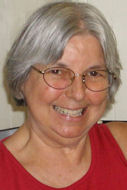
Linnea Hendrickson has been teaching children's literature at the University of New Mexico in Albuquerque since 1987. She is an elementary school librarian, an active member of the Children's Literature Association and the American Library Association, and the author of numerous articles on children's literature and of the bibliography Children's Literature: A Guide to the Criticism, now available online. Hendrickson originally posted her response to the book's controversy in the ccbc-net listserve via two different posts, one before and one after she read from this book to a third grade class. With her permission we've combined both posts into this one article.



 Printer page
 Email article
 Top of Page